I. From the Perspective of the Product Itself
(I) Specification Parameters
14mm² copper wire and 6 AWG
Stranded Copper Cable have clear and detailed definitions in terms of specification parameters, which directly determine their performance and application scope in electrical systems.
The 14mm² copper wire is based on the metric system, with its conductor cross-sectional area precisely marked as 14 square millimeters. The 6 AWG stranded copper cable follows the imperial wire gauge standard, and after accurate calculation, its cross-sectional area is approximately 13.3 square millimeters, which is very close to that of the 14mm² copper wire in value. This is one of the important reasons why they are often used in similar medium and low-load circuits.
In terms of conductor diameter, the single-strand conductor diameter of the 14mm² copper wire varies according to specific production standards, generally around 4.2mm. Since the 6 AWG stranded copper cable is made of multiple
Stranded Copper Wires, the diameter of a single fine copper wire is usually small, ranging from about 0.1-0.5mm. The conductor diameter meeting the 6
AWG specification is formed by stranding a specific number of copper wires, and the overall diameter is slightly larger than that of the single-strand 14mm² copper wire, which is determined by the multi-strand stranded structure.
Current-carrying capacity is one of the key parameters to measure cable performance. At the standard ambient temperature (usually 25℃), the continuous current-carrying capacity of the 14mm² copper wire is about 70-85A, and the specific value will be affected by factors such as the laying method and the temperature resistance level of the
Insulation Material. The continuous current-carrying capacity of the 6 AWG stranded copper cable is similar, about 65-80A. When the ambient temperature rises, the current-carrying capacity will decrease accordingly. For example, at 40℃, the current-carrying capacity of both may drop by 10%-20%.
In terms of resistance, the high-purity
Copper Conductor makes both cables have low resistance values. The resistance per kilometer of the 14mm² copper wire is about 1.2-1.5Ω, and that of the 6 AWG stranded copper cable is about 1.3-1.6Ω. The low resistance characteristic ensures that the energy loss during current transmission is small, which can effectively reduce heat generation.
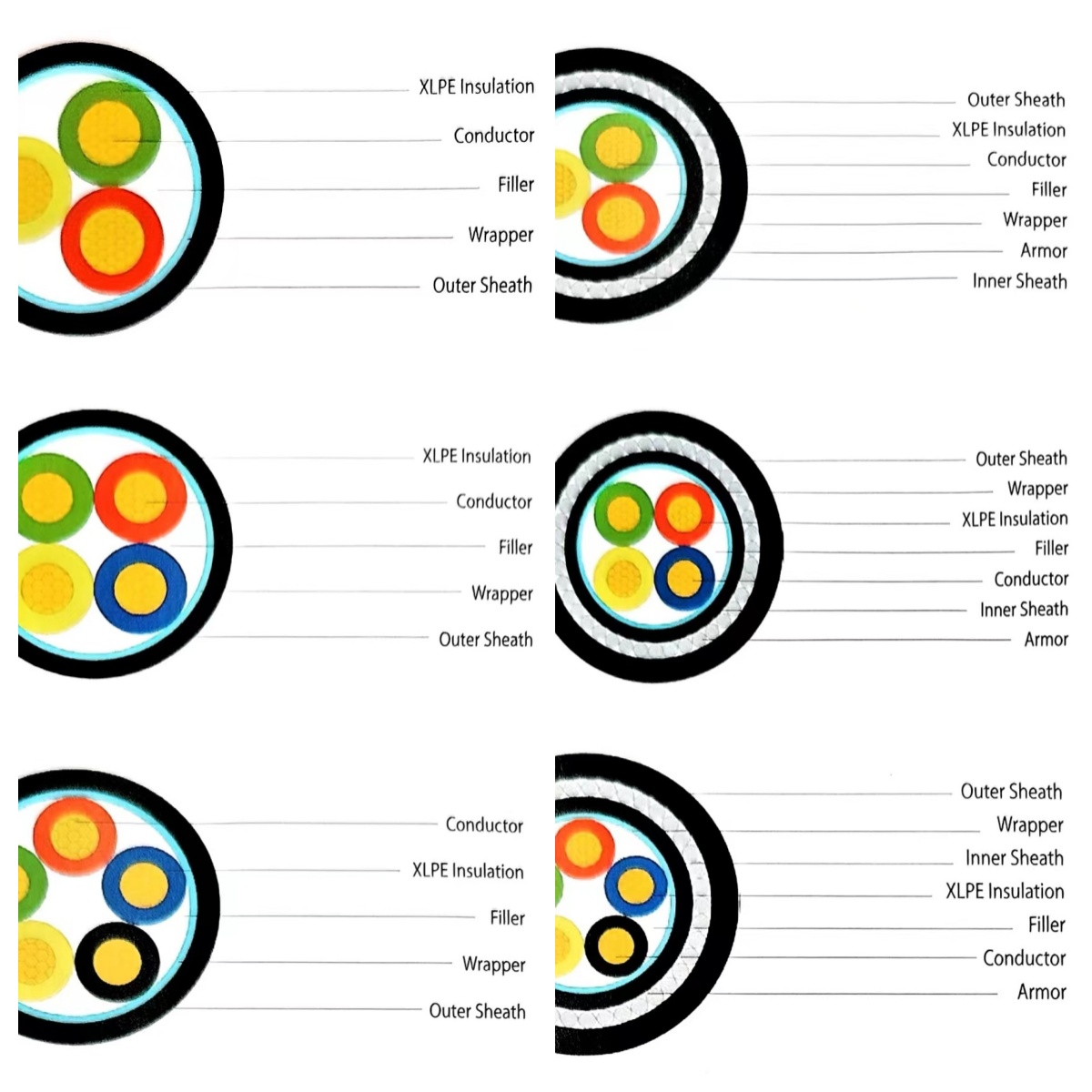
The parameters of the insulation layer cannot be ignored. Common insulation materials such as polyvinyl chloride (PVC) usually have a thickness of 0.8-1.2mm and a temperature resistance range of -15℃ to 70℃; the cross-linked polyethylene (XLPE) insulation layer has a thickness of about 0.6-1.0mm, with better temperature resistance, and can work stably in the environment of -20℃ to 90℃. The dielectric strength of the insulation layer is also an important parameter, which can generally reach 15-20kV/mm, ensuring that no breakdown occurs under the rated voltage.
(II) Characteristic Applications
14mm² copper wire and 6 AWG stranded copper cable have extensive and targeted applications in many fields due to their respective characteristics.
In the industrial field, they are ideal for
Internal Wiring of mechanical equipment. For small motors, these two cables can meet their power supply needs and ensure the stable operation of the motors. For example, some small water pump motors and conveyor belt motors with power ranging from 10-20kW often use these two cables for connection. Industrial control instruments also rely heavily on them for signal transmission and power supply, such as connecting wires in PLC control cabinets and lines between sensors and controllers. Due to the often narrow installation space of these equipment, the
Flexibility of
Stranded Cables makes wiring more convenient.
In construction engineering, they play an important role in lighting systems and power distribution. In the lighting circuits of large shopping malls, office buildings and other buildings, 14mm² copper wires and 6 AWG stranded
Copper Cables can carry the total current of multiple lighting fixtures to ensure the normal operation of the lighting system. In terms of power distribution, these two cables are often used for lines connecting small central air conditioners, elevator control cabinets and other equipment.
In the energy field, these two cables perform well in the internal line connection of small photovoltaic power generation systems and wind power generation systems. They can transmit the electricity generated by solar panels or wind turbines to inverters and other equipment, and their good conductivity helps reduce energy loss during transmission.
In the agricultural field, the power supply of electrical equipment in greenhouses is also inseparable from them. The ventilation equipment, irrigation water pumps, temperature control instruments, etc. in greenhouses have relatively small power. The current-carrying capacity of these two cables can fully meet their needs. At the same time, their certain environmental resistance can also adapt to the humidity and temperature changes in greenhouses.
In addition, in temporary power supply scenarios, such as the connection of temporary distribution boxes at outdoor construction sites, temporary lighting and equipment power supply for large-scale events, 6 AWG stranded copper cables are more popular than single-strand cables because of their good flexibility, easy movement and bending. The 14mm² copper wire plays a role in some fixed temporary power supply lines.
(III) Material and Style
Material
The core conductors of both cables are made of high-purity electrolytic copper, with a purity of more than 99.95%. High-purity copper ensures excellent conductivity, because the presence of impurities will increase resistance and affect the efficiency of current transmission. Electrolytic copper removes impurities such as iron, lead and zinc through a series of refining processes, so that the conductivity of the conductor can reach more than 97% (based on the international annealed copper standard).
There are various insulation materials, such as polyvinyl chloride (PVC) and cross-linked polyethylene (XLPE).
PVC Insulation layer has good chemical corrosion resistance, insulation performance and processing performance, and the cost is relatively low, so it is a commonly used insulation material. XLPE insulation layer changes the molecular structure of polyethylene through cross-linking reaction, making it have higher temperature resistance, mechanical strength and aging resistance, and is suitable for occasions with higher requirements for insulation performance.
In addition to conductors and insulation layers, some cables also have sheath layers, which are usually made of the same or similar materials as the insulation layers, mainly to protect the insulation layers and enhance the mechanical properties of the cables.
Style
In terms of appearance, 14mm² copper wires and 6 AWG stranded copper cables have various colors, such as black, gray, white, etc. Cables of different colors are convenient for distinguishing during wiring, such as identifying live wires, neutral wires and
Ground Wires.
In terms of structural styles, 14mm² copper wires can be divided into single-strand and multi-strand. Single-strand wires have a simple structure and strong rigidity, and are suitable for fixed laying lines; multi-strand wires are made of multiple fine copper wires stranded, with good flexibility. 6 AWG stranded copper cables are all multi-strand structures, and can be divided into ordinary stranded and precision stranded styles according to the number and stranding mode of copper wires. The number of copper wires in ordinary stranding is relatively small, and the stranding mode is relatively simple; the number of copper wires in precision stranding is more, and the stranding is more compact and uniform, which can further improve the flexibility and fatigue resistance of the cable.
In addition, there are some special styles of cables, such as flame-retardant, fire-resistant, waterproof, etc. The insulation layer and sheath layer of flame-retardant cables are made of flame-retardant materials, which can inhibit the spread of combustion when exposed to open fire;
Fire-Resistant Cables can maintain normal power supply function for a certain period of time in case of fire; the insulation layer and sheath layer of waterproof cables have good waterproof performance, and are suitable for humid or water-containing environments.
(IV) Production Process
The production process of 14mm² copper wire and 6 AWG stranded copper cable is complex and rigorous, and each link has an important impact on the quality of the product.
Copper Smelting and Rolling
First, put high-purity electrolytic copper ingots into a melting furnace for smelting. During the smelting process, it is necessary to strictly control the temperature and time to ensure that the copper ingots are completely melted and the composition is uniform. The molten copper after smelting is treated by degassing, slag removal and other processes to remove gas and impurities. Then, the molten copper is cast into copper rods, and the diameter of the copper rods depends on the subsequent processing requirements. Then, the copper rod is rolled through rolling equipment for multiple passes to gradually reduce the diameter to form a copper wire blank that meets the requirements.
Copper Wire Drawing
The copper wire blank is drawn through a wire drawing die. The aperture of the wire drawing die is gradually reduced. Through multiple drawings, the copper wire blank is drawn into a fine copper wire with the required diameter. During the drawing process, it is necessary to anneal the copper wire to eliminate the internal stress generated during the drawing process and improve the flexibility and conductivity of the copper wire. Annealing treatment is usually carried out in a special annealing furnace, and controlling the temperature and holding time is the key.
Stranding
For
Multi-Strand Cables, it is necessary to strand multiple fine copper wires according to a certain stranding mode and pitch. There are regular stranding, bunch stranding and other stranding modes. Different stranding modes will affect the flexibility, structural stability and current-carrying capacity of the cable. During the stranding process, it is necessary to ensure uniform tension of the copper wires to avoid wire breakage, loose strands and other phenomena.
Insulation Extrusion
The
Stranded Conductor needs to be extruded with an insulation layer. The insulation material (such as PVC, XLPE, etc.) is heated and melted, and then extruded on the surface of the conductor through an extruder to form a uniform insulation layer. During the extrusion process, it is necessary to control the extrusion temperature, speed and pressure to ensure that the insulation layer has uniform thickness, smooth surface and close combination with the conductor. For XLPE insulation layer, after extrusion, cross-linking treatment is also required, usually by warm water cross-linking or steam cross-linking, so that the polyethylene molecules form a cross-linked structure to improve the insulation performance.
Sheath Extrusion (if needed)
For cables with a sheath layer, after the insulation layer is extruded, the sheath layer needs to be extruded. The extrusion process of the sheath layer is similar to that of the insulation layer, but the materials and thickness used may be different.
Inspection and Packaging
The finished cable needs to undergo a series of inspections, including the detection of conductor diameter, insulation layer thickness, outer diameter, resistance, withstand voltage and other items, to ensure that the product meets relevant standards and technical requirements. Qualified cables are cut and wound according to the specified length, and then packaged, usually with wire reels or cable shafts to protect the cables from damage during transportation and storage.
II. From the Perspective of General Product Information
(I) Packaging
The packaging design of 14mm² copper wire and 6 AWG stranded copper cable fully considers factors such as protecting the product, facilitating transportation and storage, and convenient use by customers.
For coiled cables, wooden or plastic wire reels are usually used for packaging. The size of the wire reel depends on the length and diameter of the cable. Generally speaking, cables with longer length and larger diameter will use larger wire reels. Metal flanges will be installed on the side of the wire reel to enhance the strength of the wire reel and prevent the wire reel from deforming during transportation and handling. When the cable is wound on the wire reel, a certain tension will be maintained to ensure that the cable is arranged neatly and avoid looseness, knotting and other situations.
The outside of the wire reel will be wrapped with plastic film or woven bag to prevent the cable from being affected by dust, moisture and direct sunlight. For cables used in some special environments, such as waterproof and flame-retardant cables, moisture-proof and fire-proof packaging materials will also be used.
The packaging will clearly mark the relevant information of the product, including product name, specification model (such as 14mm², 6 AWG), length, production date, batch number, implementation standard, manufacturer's name, address, contact information, etc., to facilitate customers' identification and traceability of the product.
For small-length cables, carton packaging may be used. The carton is made of high-strength corrugated paper, and partitions or foam will be placed inside to fix the cables to avoid mutual collision and damage during transportation. The above product information will also be marked on the carton.
(II) Transportation
During transportation, a series of measures need to be taken to ensure the safety of 14mm² copper wire and 6 AWG stranded copper cable.
First of all, when loading goods, the cable reels or cartons should be placed stably on the transport vehicle to avoid tilting and inversion. For cables packaged in reels, ropes or steel belts should be used to fix them on the vehicle to prevent movement and collision due to vehicle 颠簸 during transportation. A certain gap should be left between multiple reels to avoid mutual extrusion.
During transportation, avoid sun exposure, rain and high-temperature environments. For long-distance transportation, transport vehicles should be equipped with sunshade and rainproof facilities, such as tarpaulins. At the same time, avoid contact between the cable and sharp objects and chemicals to prevent damage to the insulation layer and sheath of the cable.
During transportation, traffic rules should be observed, and sudden braking and sharp turns should be avoided to reduce the impact on the cable. For large reels, special transport vehicles and hoisting equipment may be needed for loading and unloading to ensure the safety of the loading and unloading process.
Before transportation, the manufacturer will sign a transportation contract with the logistics company to clarify the rights and obligations of both parties to ensure that the cables can be delivered to the destination on time and safely. At the same time, the transportation status of the cable will be tracked, and problems arising during transportation will be handled in a timely manner.
(III) Delivery
The delivery process is rigorous and standardized to ensure that customers can receive the required cable products in a timely and accurate manner.
After the customer places an order, the sales staff will review the order to confirm whether the information such as product specification model, quantity, delivery date and delivery address is accurate. After passing the review, the order information will be transmitted to the warehouse department.
Warehouse managers will prepare goods according to the order information, retrieve the corresponding cable products from the inventory, and check the packaging and labels of the products to ensure that the products meet the order requirements. If the inventory is insufficient, the production department will be notified in time to arrange production to ensure delivery within the specified delivery period.
After the goods are prepared, the warehouse department will transfer the products to the logistics department. The logistics department will choose an appropriate transportation method, such as road transportation, railway transportation, sea transportation, etc., according to the delivery address and customer requirements. For urgent orders, air transportation may be used to shorten the delivery time.
Before delivery, the logistics department will recheck the products to ensure that the delivered products are consistent with the order. At the same time, a delivery note will be generated, indicating the product name, specification model, quantity, transportation method, delivery date and other information, and the delivery note will be transmitted to the customer in a timely manner to facilitate the customer's preparation for receipt.
(IV) Samples
In order to allow customers to understand the quality and performance of the product before mass purchase, the manufacturer provides sample services.
Customers can request samples from the manufacturer by phone, email, online platform, etc., indicating the specification model and quantity of the required samples. After receiving the sample request, the manufacturer will confirm the customer's request within 1-3 working days and inform the customer of relevant information about the sample, such as whether a sample fee is required, the delivery method and time of the sample, etc.
For samples of conventional specifications, manufacturers usually provide them free of charge, but customers may need to bear the mailing cost of the samples. For samples of special specifications or customized samples, manufacturers may charge a certain sample fee, which can be refunded after customers make mass purchases.
The packaging of samples is similar to that of formal products to ensure that the samples are not damaged during transportation. At the same time, a sample test report will be attached with the sample, including the test results of parameters such as conductor diameter, insulation layer thickness, resistance and withstand voltage, so that customers can intuitively understand the quality of the sample.
After receiving the sample, customers can conduct various performance tests and trials, such as testing the conductivity, flexibility and insulation performance of the sample. If the customer is satisfied with the sample, they can place a bulk order; if there are any problems, the manufacturer will make adjustments and improvements according to the customer's feedback.
(V) After-sales Service
A sound after-sales service system is an important link to protect customers' rights and interests, and the manufacturer provides comprehensive support in after-sales service.
Quality Assurance
The manufacturer promises that the 14mm² copper wire and 6 AWG stranded copper cable produced meet the relevant national standards and industry standards, and the product quality guarantee period is usually 1-2 years. During the quality guarantee period, if the failure or damage is caused by the product's own quality problems, the manufacturer will provide customers with free repair, replacement or return services.
Technical Support
Customers can contact the manufacturer's technical support team at any time if they encounter any technical problems during installation and use. Technical support personnel will provide customers with professional technical guidance through phone, email, video, etc., to solve customers' questions. For example, guide customers on how to correctly choose the cable laying method and how to connect the cable.
Complaint Handling
If customers have any complaints about products or services, the manufacturer will accept the complaints within 24 hours and arrange special personnel to investigate and handle them. After finding out the cause, a satisfactory solution will be given to the customer within 3-7 working days.
Regular Return Visits
The manufacturer will conduct regular return visits to customers to understand the use of products and customers' needs, collect customers' opinions and suggestions, and continuously improve product quality and service


 English
 Español
 Portugues
 Pусский
 العربية
 ไทย
ไทย Türk dili
 Indonesia
 Tiếng Việt



 Téléphone
 E-mail