
 English
 Español
 Portugues
 Pусский
 العربية
 ไทย
ไทย Türk dili
 Indonesia
 Tiếng Việt


High Temperature Cable
High temperature cables are specialized electrical cables designed to operate in environments where both high thermal and electrical demands are present. These cables are capable of withstanding elevated temperatures without compromising performance, making them essential in a variety of industrial and commercial applications where standard cables would fail.The primary feature of high temperature cables is their ability to maintain functionality at temperatures significantly higher than regular cables, often ranging from 150°C to over 1000°C. This is achieved through the use of advanced insulating materials such as silicone rubber, PTFE (Polytetrafluoroethylene), mica, fiberglass, and ceramics. These materials provide excellent thermal stability, electrical insulation, and resistance to thermal degradation.One of the most common uses of high temperature cables is in industries such as aerospace, automotive, steel, and glass manufacturing, where equipment often operates at extreme temperatures. In aerospace, for example, cables are needed to withstand the intense heat generated by engines and other onboard systems. Similarly, in the steel industry, high temperature cables are utilized in areas near furnaces where temperatures soar.These cables are also essential in the energy sector, particularly in applications involving solar panels and wind turbines, where exposure to harsh weather conditions and temperature fluctuations are common. The robustness of high temperature cables ensures that they can deliver reliable performance even in the most challenging environments.Besides their heat resistance, high temperature cables are often designed to offer additional properties such as resistance to chemicals, oil, moisture, and abrasion. This makes them not only suitable for high heat applications but also for environments where cables are exposed to potentially damaging substances.Moreover, the construction of high temperature cables often includes features such as stranded conductors, which provide flexibility and ease of installation. The selection of conductor materials can vary, but common choices include nickel-plated copper and stainless steel, which can withstand both the physical and thermal stresses encountered in high temperature applications.Safety is another critical aspect of high temperature cables, as their use in potentially hazardous environments requires high reliability and performance standards. They often comply with rigorous industry standards and certifications to ensure they meet safety and efficiency requirements.In summary, high temperature cables play a vital role in numerous industrial applications that demand resilience to extreme temperatures. Their specialized materials and construction enable them to deliver consistent performance, safety, and reliability, making them indispensable in environments that challenge standard cable solutions. As technology progresses and industries continue to push the boundaries of what is possible, the demand for high temperature cables is expected to grow, driving innovation and development in this specialized field.
Produit
Catégorie:
Câble isolé minéral
-
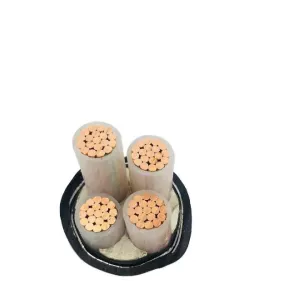
High Temperature Resistant 95 mm2 4 Core X 70mm2 95 120 Sq mm Pure Copper Non Armoured PVC Power Cable
Leur classification: Câble basse tensionVues: 287Numéro:Temps de libération: 2025-07-29 03:34:29This series of power cables covers various wire diameter specifications such as 70mm², 95mm² and 120mm², including the 95mm² 4 - core model, which is suitable for different power consumption scenarios. Pure copper is used as the conductive core, which has excellent conductivity and low power transmission loss. It can stably carry large currents and meet the high - power electricity needs of industrial equipment, large - scale machinery and so on. The cable has high temperature resistance and can work stably for a long time in a relatively high - temperature environment, making it suitable for places with heat sources. The outer layer is made of PVC insulation material, which has reliable insulation performance and certain wear resistance and chemical corrosion resistance, and can adapt to a variety of complex working conditions. The non - armoured design makes the cable more flexible and easier to bend during laying, especially suitable for installation environments with limited space. The quality of the product is strictly controlled during production. The purity of the pure copper material and the craftsmanship of the PVC insulation layer have been inspected to ensure the insulation stability and conductive safety in high - temperature environments. The diverse specification options and adaptability make it widely applicable in industrial power distribution, equipment connection and other scenarios. -
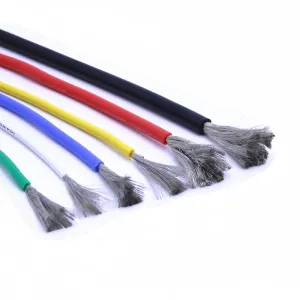
High Temperature Heat Resistant Strand Copper Silicone Rubber Cable Heat Resistant 12 14 16 18 20 22 24 26 AWG Gauge
Leur classification: Fil de constructionVues: 253Numéro:Temps de libération: 2025-09-09 08:02:08High temperature heat resistant stranded copper silicone rubber cables, available in 12 to 26 AWG gauges, are specialized electrical conductors engineered to perform reliably in extreme thermal environments. These cables combine the excellent conductivity of stranded copper with the exceptional heat resistance of silicone rubber insulation, making them indispensable in applications where conventional cables would degrade or fail under high temperatures. The core of these cables consists of stranded copper conductors, with the number of strands increasing as the AWG gauge becomes smaller (higher gauge number). For example, 12 AWG cables typically feature 19 strands of 0.30mm diameter copper wire, while 26 AWG cables use 7 strands of 0.16mm diameter wire. This stranded design enhances flexibility, allowing the cables to bend and route easily around equipment and in tight spaces—critical for installations in industrial machinery, ovens, or aerospace systems where movement or compact routing is necessary. The copper used is high-purity (99.95% minimum), ensuring low electrical resistance and efficient current transmission even in high-heat conditions. The defining feature of these cables is their silicone rubber insulation, which provides exceptional heat resistance. Unlike PVC or rubber insulations that degrade above 100°C, silicone rubber maintains its integrity at continuous operating temperatures ranging from -60°C to 200°C, with short-term tolerance up to 250°C. This thermal stability is achieved through the cross-linked molecular structure of silicone, which resists oxidation and breakdown under extreme heat. Additionally, the insulation offers excellent resistance to ozone, UV radiation, and many chemicals, making it suitable for both indoor and outdoor use in harsh environments. The AWG gauge range (12 to 26) caters to diverse current-carrying requirements. Larger gauges (12 to 16 AWG) are designed for higher power applications, with 12 AWG cables handling up to 30A, making them ideal for powering heating elements, industrial furnaces, or large motors in high-temperature zones. Smaller gauges (18 to 26 AWG) are used for low-power signals and control circuits, such as thermocouple wiring, sensor connections in ovens, or aerospace instrumentation, where precise signal transmission in high heat is essential. For instance, 24 AWG cables, rated for approximately 3A, are commonly used in temperature sensors within industrial kilns. Safety is a key attribute, with the silicone insulation providing a dielectric strength of ≥20kV/mm, preventing electrical leakage and short circuits even at elevated temperatures. The insulation is also flame-retardant, self-extinguishing when exposed to fire, which is crucial for applications in enclosed spaces like engine compartments or manufacturing plants. Additionally, the cables are often rated for low smoke emission, reducing visibility hazards in case of fire. Applications of these high-temperature cables are diverse and demanding. In industrial settings, they are used in kilns, boilers, and plastic processing machinery, where they connect heating elements and control systems. Automotive and aerospace industries rely on them for wiring in engine bays, exhaust systems, and jet engines, where ambient temperatures exceed 150°C. They are also essential in household appliances such as ovens, toasters, and dryers, providing internal wiring that withstands the heat generated during operation. In renewable energy systems, these cables connect components in solar panels and geothermal equipment, where exposure to high temperatures and UV radiation is common. Laboratory equipment, such as high-temperature ovens and autoclaves, uses smaller gauge cables (20 to 26 AWG) for precise temperature control and monitoring. In summary, high temperature heat resistant stranded copper silicone rubber cables (12 to 26 AWG) stand out for their unique combination of flexibility, thermal stability, and conductivity. Their ability to perform reliably in extreme temperatures from -60°C to 250°C, coupled with resistance to environmental stressors, makes them a critical component in industries where conventional cables cannot survive. Whether for power transmission or signal control, these cables deliver consistent, safe performance in the most demanding high-heat applications.
Actualités
Catégorie:
Aucun résultat de recherche!
Affaire
Catégorie:
Aucun résultat de recherche!
Vidéo
Catégorie:
Aucun résultat de recherche!
Téléchargement
Catégorie:
Aucun résultat de recherche!
Recrutement
Catégorie:
Aucun résultat de recherche!
Produits recommandés
Aucun résultat de recherche!



 Téléphone
 E-mail