
 English
 Español
 Portugues
 Pусский
 العربية
 ไทย
ไทย Türk dili
 Indonesia
 Tiếng Việt


Household wires
Household wires play a crucial role in ensuring the safe and efficient distribution of electricity throughout a home. They are the medium through which electrical current travels from the main power supply to various outlets, switches, and appliances. Understanding the types, structure, and safety considerations of household wires is essential for both electricians and homeowners.The most common type of household wire is made from copper, known for its excellent conductivity and flexibility. Some wires are also made from aluminum, although they are less frequently used in new installations due to safety concerns. Household wires generally consist of a metal conductor, an insulating material, and sometimes an additional protective sheath. The insulation, often made of materials like PVC or rubber, prevents accidental contact with the conductor and reduces the risk of electric shocks or short circuits.Wires are categorized by their gauge, which refers to their thickness. Thicker wires (lower gauge numbers) can carry more current and are used for demanding applications such as ovens, air conditioners, and water heaters, while thinner wires (higher gauge numbers) are suitable for lighting and general outlets. Color coding is another important aspect; in many regions, wires are color-coded to indicate their function. For example, live wires are often black or red, neutral wires are white or gray, and ground wires are green or bare.Installation of household wires must comply with local electrical codes and standards to ensure safety. Proper routing through walls and ceilings, secure connections at junction boxes, and the use of appropriate protective devices such as circuit breakers and fuses are essential steps. Overloading a wire by connecting too many devices can lead to overheating and potentially cause a fire. Regular inspection and maintenance are also important, especially in older homes where insulation may degrade over time.In addition to power wires, modern homes may also contain specialized wiring for telecommunications, internet, and home automation systems. These wires are designed with specific materials and shielding to reduce interference and ensure reliable signal transmission.To summarize, household wires are an essential component of any residential electrical system. They must be selected, installed, and maintained according to strict safety standards. Understanding the basic properties and functions of these wires helps homeowners operate their electrical systems safely and efficiently, preventing accidents and ensuring uninterrupted power supply in everyday life.
Produit
Catégorie:
Fil de construction
-
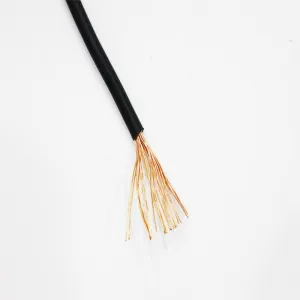
Electrical Copper Wire Household BV Copper Core Insulated Flexible Cable Power Cable Manufacturers Electrical-Wires
Leur classification: Fil de constructionVues: 267Numéro:Temps de libération: 2025-09-10 06:31:42Household BV copper core insulated flexible cables are essential electrical wires designed for indoor power distribution in residential, commercial, and light industrial settings. Manufactured by specialized electrical wire producers, these cables feature a solid or stranded copper core, PVC (polyvinyl chloride) insulation, and a focus on safety, flexibility, and compliance with global electrical standards. Widely used for wiring sockets, switches, lighting fixtures, and small appliances, BV cables balance performance and affordability, making them a staple in household electrical systems worldwide. Core Design and Material Specifications At the heart of BV cables is a high-purity copper conductor, chosen for its excellent electrical conductivity (58 MS/m at 20°C) and low resistance, which minimizes energy loss during power transmission. The conductor is available in two configurations: Solid Core: A single, rigid copper wire (common in smaller gauges like 1.5mm² and 2.5mm²) offers ease of termination and is ideal for fixed, permanent installations where flexibility is not a primary concern. Stranded Core: Multiple fine copper strands twisted together (prevalent in larger gauges such as 4mm² and 6mm²) enhances flexibility, making it suitable for applications requiring bending around corners or through tight conduits. The copper used is typically electrolytic grade with 99.9% purity, ensuring minimal impurities that could degrade conductivity. Some manufacturers also offer tinned copper cores for improved corrosion resistance, though this is more common in humid or coastal regions. Insulation and Safety Features BV cables are insulated with PVC, a material prized for its durability, flame retardancy, and resistance to heat, moisture, and chemicals. The insulation thickness varies by conductor size: 0.6mm for 1.5mm² cables, 0.7mm for 2.5mm², and up to 1.0mm for 6mm², ensuring adequate electrical isolation (dielectric strength ≥15kV/mm) to prevent short circuits or electric shock. PVC insulation in BV cables meets strict safety standards, including flame retardancy ratings (e.g., UL 94 V-0 and IEC 60332-1) to slow fire spread, and low smoke emission to reduce toxicity in case of combustion. This makes them compliant with global regulations such as the National Electrical Code (NEC) in the U.S., BS 6004 in the UK, and GB 5023 in China. Gauge Sizes and Power Capacity BV cables are available in gauge sizes (cross-sectional areas) tailored to household power demands: 1.5mm²: Suitable for lighting circuits and low-power devices (e.g., lamps, phone chargers), with a current rating of ~16A (230V AC). 2.5mm²: Used for general-purpose outlets powering appliances like TVs, refrigerators, and microwaves, supporting up to 25A. 4mm² and 6mm²: Designed for high-power circuits such as air conditioners, electric water heaters, and ovens, with current ratings of 32A and 40A, respectively. These gauges ensure the cable can handle the maximum load of household circuits without overheating, a critical factor in preventing electrical fires. Applications and Installation BV cables are versatile in domestic and light commercial settings: Residential Wiring: Primary use in home electrical systems, connecting distribution boxes to sockets, switches, and lighting fixtures. Solid-core 1.5mm² and 2.5mm² cables are standard for lighting and socket circuits, respectively. Renovations and Additions: Stranded-core BV cables are preferred for retrofitting older homes, as their flexibility simplifies installation in existing walls or conduits. Small Commercial Spaces: Offices, shops, and clinics use 4mm² and 6mm² BV cables for powering printers, HVAC units, and small medical equipment. Installation typically involves routing through PVC conduits, wall cavities, or trunking, with termination via screw terminals or crimp connectors. Manufacturers often provide color-coded insulation (e.g., red for phase, blue for neutral, green/yellow for earth) to simplify wiring and ensure compliance with safety standards. Manufacturer Standards and Quality Control Reputable electrical wire manufacturers produce BV cables under rigorous quality control, including: Conductivity Testing: Verifying copper purity and resistance to ensure optimal performance. Insulation Integrity Checks: Testing for pinholes, thickness uniformity, and heat resistance (up to 70°C continuous operation). Compliance Certification: Obtaining approvals from bodies like UL, CE, and CCC to validate adherence to international safety norms. Many manufacturers also offer customizations, such as colored insulation for phase identification or longer reel lengths (50m, 100m, 500m) for wholesale distribution to electricians and contractors. In summary, household BV copper core insulated flexible cables are reliable, safe, and cost-effective solutions for domestic power distribution. Their copper conductors, PVC insulation, and adherence to global standards make them a trusted choice for manufacturers, electricians, and homeowners alike, ensuring efficient and secure electricity supply in everyday settings.
Actualités
Catégorie:
Aucun résultat de recherche!
Affaire
Catégorie:
Aucun résultat de recherche!
Vidéo
Catégorie:
Aucun résultat de recherche!
Téléchargement
Catégorie:
Aucun résultat de recherche!
Recrutement
Catégorie:
Aucun résultat de recherche!
Produits recommandés
Aucun résultat de recherche!



 Téléphone
 E-mail